In this article
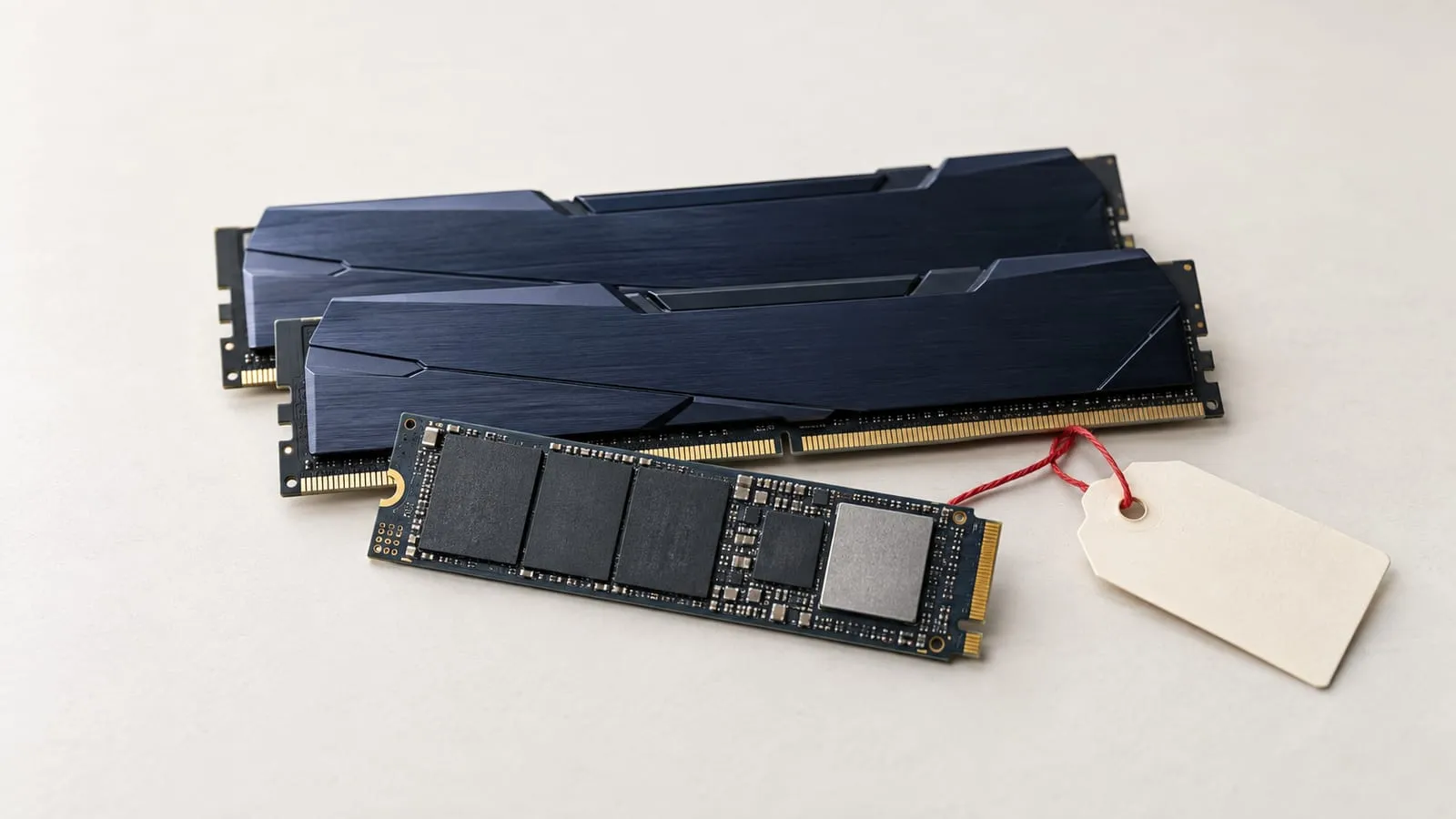
I bought 64 GB of DDR5-6000 a month ago for $300. The same kit today: $1,500.
That’s the part of the AI conversation nobody puts in a press release. The technology costs $300 a desk to play with at the user end. It is costing the rest of us a few thousand dollars per workstation refresh, and no single line item on the quote names it.
Which prices are moving, and why
The big mover is RAM, the working memory in every computer. DDR5-6000 2 x 32 GB has gone from an 18-month average around $400 to over $1,000, with spot retail prices well above that. DDR4, the older generation, is moving the same way. SSD prices, the storage drives, have started to follow over the past few weeks. Supply is tight enough that we’re seeing delivery dates slip on confirmed orders, which we hadn’t seen since the 2020 to 2022 chip shortage.
The cause is structural. Hyperscale datacentres being built out for AI training and inference are buying memory and storage in volumes the supply chain was never sized for. What’s left after those orders is what goes into laptops, desktops, virtual reality headsets, phones and office servers. There isn’t much left.
What this means for your hardware budget
Three things to plan for in the next 12 months.
Workstation and laptop refreshes will cost 20% to 30% more than they did 18 months ago. Your vendor isn’t gouging you. The components genuinely cost that much now. If you’re budgeting against a quote from late 2024, refresh the quote before you sign anything off.
Server refreshes are worse than that. Server-grade memory is competing for the same factory output as the datacentre orders. If you’ve been planning a hardware refresh for a server in your own building, the price in Australian dollars is going to look bad. We’re routinely advising clients to keep the existing server running for another 12 months on a maintenance contract. That works where the box is still serviceable and the workload allows it. We revisit when the supply chain catches up.
Windows 10 just hit end-of-life and a lot of organisations didn’t make it. Plenty of Australian small and medium businesses are still on Windows 10 with extended security updates. Their hardware doesn’t meet the Windows 11 requirements. That refresh still has to happen, and a lot of it will be in 2026. It comes on top of an AI buildout already straining the supply chain. If you haven’t started planning yours, now is the moment.
Will prices normalise?
Eventually, yes. Graphics cards did this during the crypto boom: prices ran up, then settled well below the peak but higher than they were before it. The chip shortage recovery after COVID did the same thing.
Don’t plan your budget around it happening soon. Once vendors get used to selling at higher prices, the price they will accept stops coming back down. Add tariff uncertainty in the US-China supply chain, and an AI buildout that continues through 2026. Our realistic forecast is that current prices are closer to the new normal than to a temporary peak.
What we’re doing for clients
A few practical things, where they apply:
- Running annual hardware planning earlier than usual so we can secure stock at fixed prices rather than scrambling at end-of-life.
- Recommending stretched lifecycles where the existing kit is still healthy and the workload doesn’t demand new silicon.
- Talking clients out of non-essential upgrades. If the laptop still does the job, the laptop still does the job.
- Planning Windows 11 transitions in waves rather than panic-ordering everything in the same quarter as the rest of the country.
Who actually pays for the AI buildout
Whether or not you’ve ever opened a chatbot in your life, you’re paying for the AI buildout.
No ChatGPT subscription. No Copilot. You’ve never opened a chatbot in your life. You’re paying for the AI buildout anyway. It’s in your laptop refresh quote. In your power bill. In water consumption around regional datacentres. In the cost of every component the datacentre supply chain is also bidding for.
Training the next big AI model is expensive, and the bill is spread across everyone who buys hardware or electricity. Anyone buying anything made from the same scarce parts pays a share. That isn’t an argument against AI. It’s an argument for being clear-eyed about who pays for the buildout, and timing your hardware decisions accordingly.
If you’d like a hand reviewing your refresh schedule before the next budget cycle, talk to us.
Tags
- hardware
- procurement
- ai-impact
- ddr5
- opinion